
What Is a Kent County Court Docket
A docket is the official list of events in a court case. In Michigan it is also called the register of actions, which the courts define as the docket history of case events. Every time a party files a motion, a judge signs an order, or a hearing is set, a new line goes on the docket. That line records the date, what happened, and often who filed it. Read top to bottom, the docket tells the story of a case from the first complaint through the final judgment.
A docket is not the same as the full case file. The docket is the index. The full file holds the actual documents, the motions, the exhibits, and the signed orders behind each entry. Many Kent County dockets can be viewed online for free, while the underlying documents may require a visit to the clerk or a copy fee. For most people, the docket answers the everyday questions: when is the next hearing, what was the last ruling, and is the case still open.
Michigan court rules set the baseline for how these records are kept and released. Under MCR 8.119, court records are public unless a rule, a statute, or a judge's order makes them nonpublic or sealed. That default is why a Kent County docket search returns real results for most ordinary civil, criminal, and traffic cases.
What a Kent County Docket Entry Shows
The columns you see depend on which court system holds the case, but the core fields are consistent across Kent County. The 62-B District Court public case grid is a good model. It lists case number, status, party name, date of birth, and attorney, and each row can be expanded for the full case detail and the list of docket events. The table below breaks down the fields a searcher usually sees on a Kent County docket result.
| Field | What It Shows |
|---|---|
| Case Number | The court's unique case identifier, often combining the filing year and a court-specific code. |
| Status | Whether the case is active or resolved, shown with values such as OPEN or CLOSED. |
| Party Name | The plaintiff, defendant, petitioner, or respondent tied to the case. |
| Date of Birth | Used to separate people who share a common name; strongly recommended for wide searches. |
| Attorney | Counsel of record listed for a party in the case. |
| Hearing Date | The next scheduled court date and, on the register of actions, past hearing history. |
Case status is one of the most useful fields. An OPEN case is still moving, with future hearings possible. A CLOSED case has reached disposition, the term Michigan uses for the case outcome. Beyond these columns, the register of actions expands into a dated list of filings, orders, and hearing results, which is where a docket earns its value as a timeline of the case.
How to Find Kent County Dockets Online
Kent County does not run one universal docket database. Instead, the 17th Circuit Court and each district court publish their own tools, so the first task is matching the case to the right court. The 17th Circuit Court search page is the hub for higher-level cases and links out to name search, hearing schedules, motion calendars, online payments, judges, and eFiling. Felony, higher-value civil, and family cases generally live at this circuit level, while misdemeanors, small claims, and landlord-tenant cases sit in the district courts.
The court-native search strategy is the same across most of these portals. The case number is the fastest path to a single docket. When only a name is known, a date of birth narrows results for common names, and the "contains" filter is the most useful option for partial or uncertain spellings. Those tips come straight from the county's district court guidance and apply whether the case sits in circuit or district court. The steps below show how a search runs by case number compared with a name.
- Identify the court first. Match the case to the 17th Circuit Court or to the 59th, 61st, 62-A, 62-B, or 63rd District Court, then open that court's docket portal.
- If you have the case number, enter it directly. This is the quickest way to pull a single docket and the register of actions for that case.
- If you only have a name, enter the last name, then add the date of birth when the name is common so the results point to the right person.
- Set the search to "contains" rather than an exact match when a spelling is uncertain, since the courts flag this as the most useful filter.
- Open the matching row to expand the case status, party header, attorney, and the dated docket entries, then note the next hearing date if one is set.
The 62-B District Court in Kentwood runs one of the clearest public case grids in the county. You can open the 62-B public case search portal to see the case number, status, party, and date-of-birth columns described above. The 62-B FAQ repeats the same advice, noting the case number is the quickest route and that a records check without a case number or party name is limited.
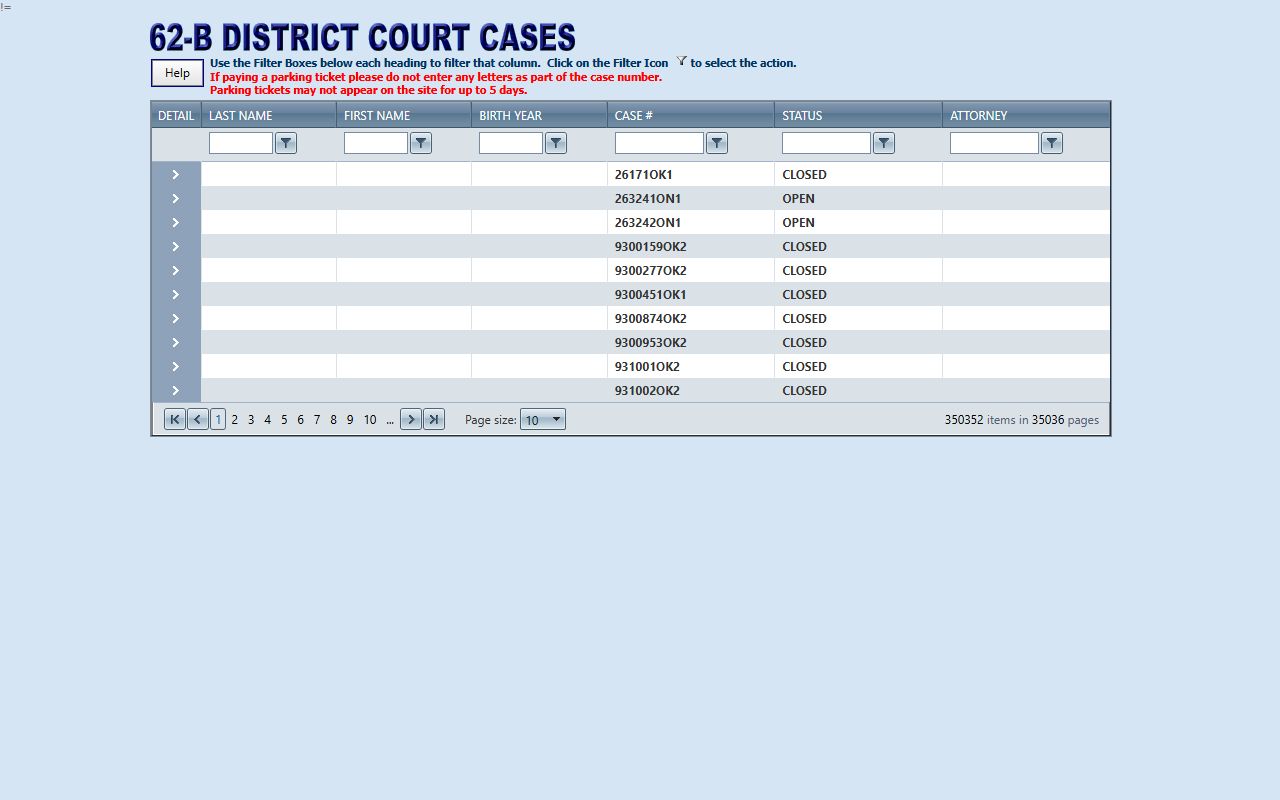
That grid layout is why 62-B is a good starting example for anyone learning to read a Kent County docket, because every field lines up in one view before you drill into a single case.
Courts That Publish Dockets in Kent County
Docket access is split by court, and each venue has its own portal and its own coverage. Some systems wrap the search in a login page, and some route through MiCOURT, the statewide case-search service. The list below maps the main Kent County docket channels and what each one covers.
- 17th Circuit Court: hearing schedules, motion calendars, and a name search account for felony, higher civil, and family cases at the county courthouse.
- 61st District Court in Grand Rapids: a public access portal offering online court records and the court calendar.
- 62-A District Court in Wyoming: a MiCOURT case search with the register of actions for public records from 1990 forward.
- 62-B District Court in Kentwood: a public case grid embedded from the city site with case, status, name, and date-of-birth columns.
- 63rd District Court: a MiCOURT case search plus a hearing schedule link, covering Cedar Springs, East Grand Rapids, Lowell, Rockford, and area townships.
The 61st District Court in Grand Rapids labels its docket tool a public access page, though the site wraps it in a login screen and warns that recent entries may not appear immediately. You can reach it through the 61st District Court public access portal, which lists both court records and the court calendar. It is a real searchable system rather than a static contact page, so it is the right stop for Grand Rapids district cases.
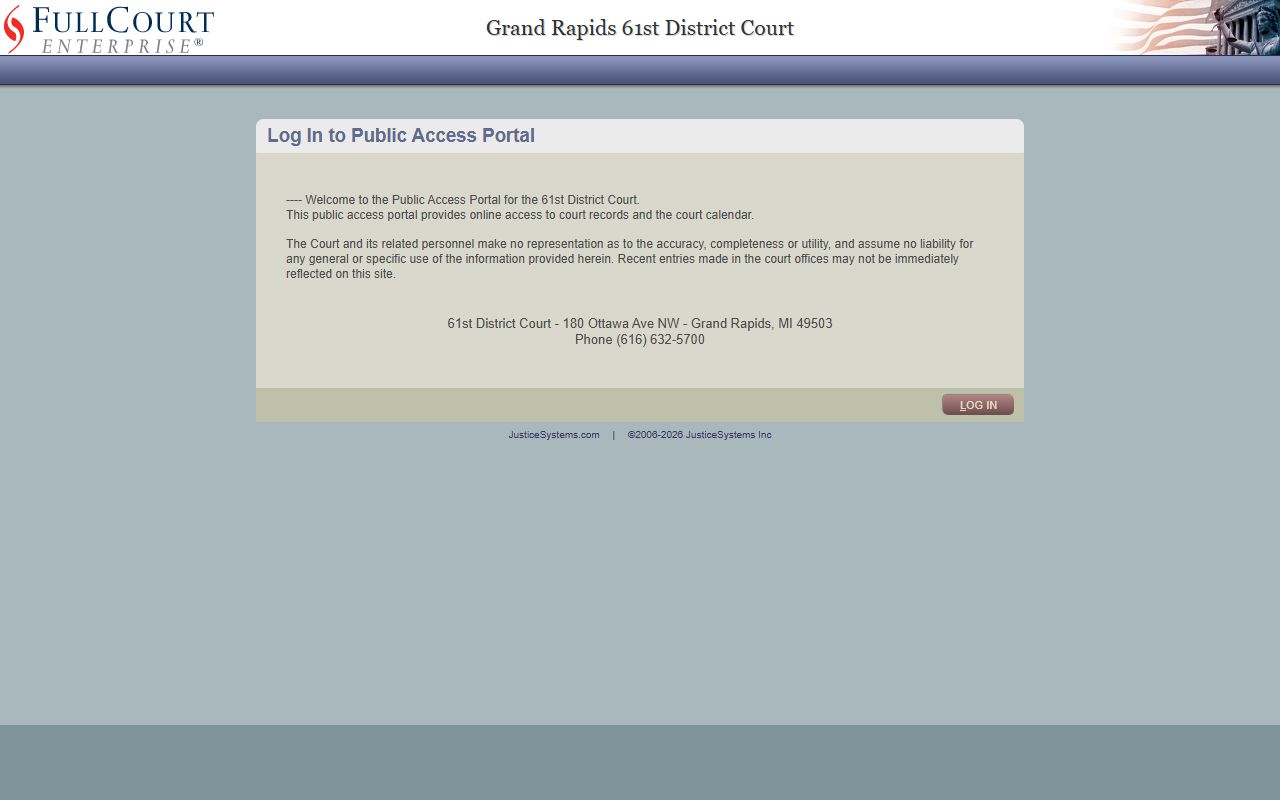
Because that portal opens with a login wrapper, first-time users often expect a paywall. The access itself is public, so the login screen is a gateway rather than a barrier to the 61st District Court dockets behind it.
The 62-A District Court in Wyoming sends searchers to MiCOURT for its dockets. Its 62-A court records search page explains that the portal gives basic court information and a register of actions for public records from 1990 forward, and that it does not display nonpublic records. The court and its FAQ both advise using the case number first, then the name, then the date of birth for common names.
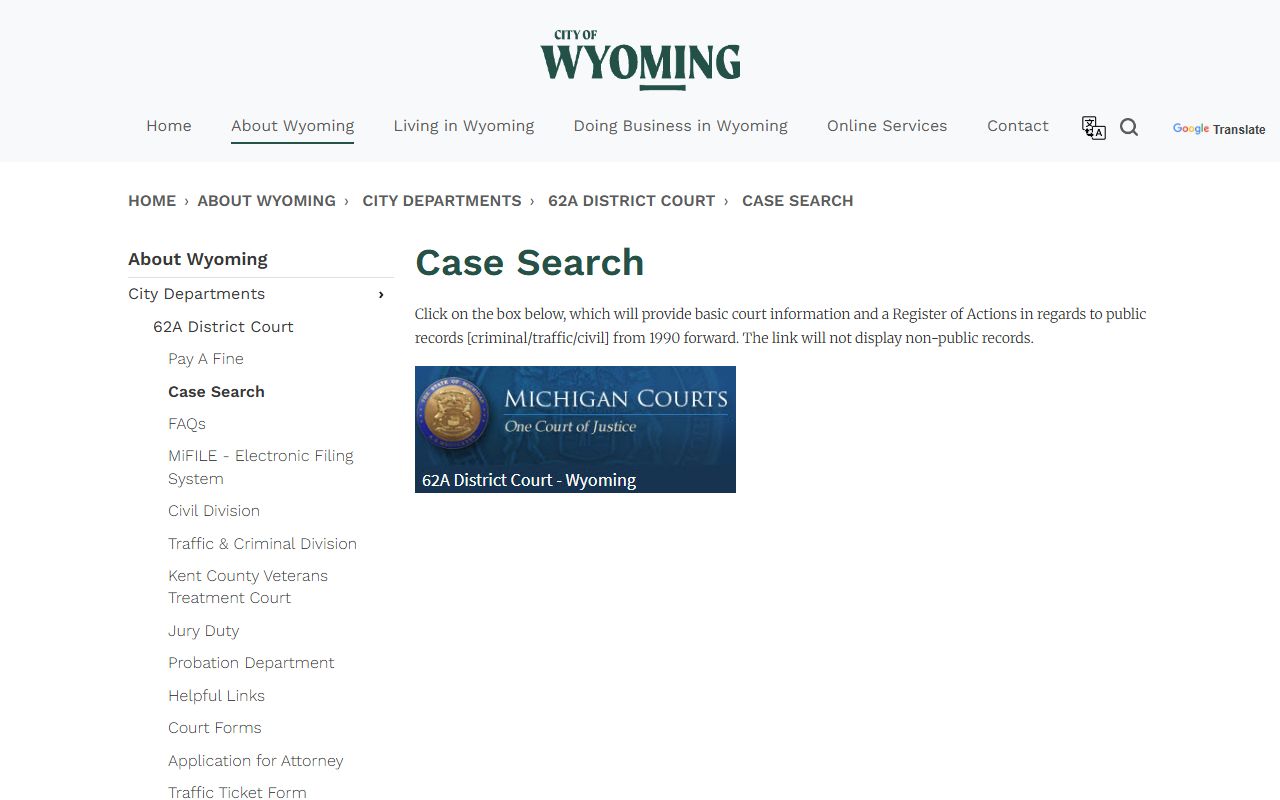
That 1990-forward window matters for older matters, since a Wyoming district case filed before that cutoff may not surface online and could require a call or visit to the court instead.
Both the 62-A and the 63rd District Courts run their public dockets through MiCOURT, the statewide case-search system. The MiCOURT case search for the 62-A District Court shows how the statewide tool presents a single court's register of actions. The 63rd District Court adds a separate hearing schedule link, and its criminal page routes traffic and misdemeanor lookups through Michigan Courts Epay by selecting Kent County and Grand Rapids D63.
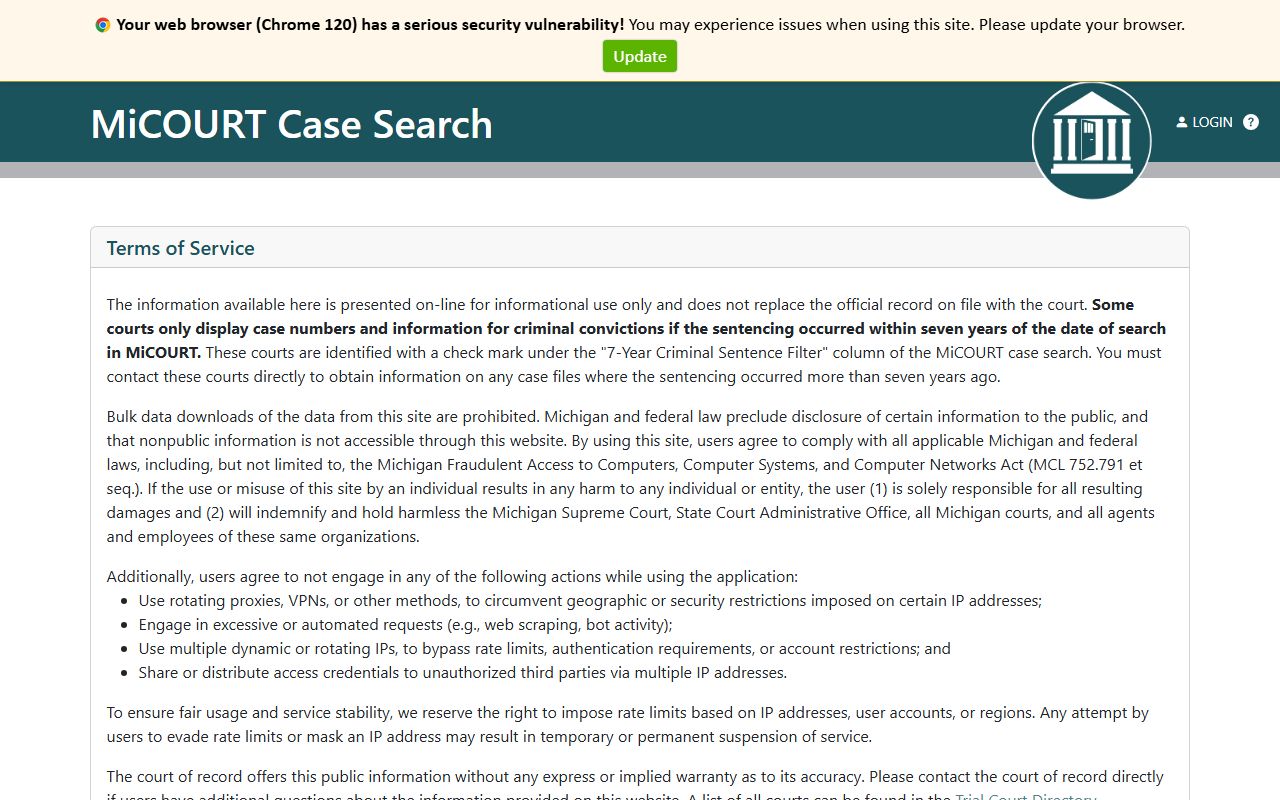
Seeing the MiCOURT interface for one Kent County court makes the others easier to use, because the statewide layout stays the same from the 62-A docket to the 63rd docket.
Circuit vs District Dockets in Kent County
The biggest reason a docket search stalls is looking in the wrong court. Kent County splits its caseload between the 17th Circuit Court and the district courts, and the docket you need follows the case type. Felonies, higher-value civil suits, and family matters such as divorce move through Circuit Court. Misdemeanors, small claims, landlord-tenant cases, and traffic matters usually sit in one of the district courts. The comparison below lines up the two docket tracks.
| Circuit Court Docket | District Court Docket | |
|---|---|---|
| Case Types | Felonies, higher civil, family and divorce | Misdemeanors, small claims, landlord-tenant, traffic |
| Where to Search | 17th Circuit Court search page and name search | 61st, 62-A, 62-B, or 63rd District Court portal |
| Extra Tools | Hearing schedules, motion calendars, eFiling | MiCOURT case search, Epay for fines |
| Coverage Note | County-wide higher-level matters | Split by city and township venue |
The district courts are local trial courts, not a separate county-court layer. Kent County runs five district venues, and a single case belongs to only one of them based on where the offense or dispute arose. When a felony case begins in a district court for the arraignment and preliminary exam and then binds over, its later docket activity shifts to the 17th Circuit Court. Anyone tracing a serious criminal matter may need to check both dockets to follow the case from start to finish. The full charge-by-charge history sits in the Kent County criminal court records.
Public and Nonpublic Kent County Docket Entries
Not every case event reaches a public docket. Michigan starts from an open-records default, then carves out protected material. The practical rule is that public case records are open unless a statute, a court rule, or a judge's order makes them nonpublic. That is why most civil, criminal, and traffic dockets appear in full while certain categories stay hidden.
Some data is redacted rather than fully removed. Under MCR 1.109, public filings must omit protected personal identifying information, so Social Security numbers, account numbers, and similar details are stripped from the view. A docket line may confirm that a document was filed without exposing the sensitive numbers inside it. Broader background checks that reach beyond a single case are pointed toward the Michigan State Police and the Department of State, not the court docket portals.
Whole categories can be nonpublic. Juvenile matters, sealed records, expunged convictions, adoption files, and many mental-health proceedings are limited or closed to the general public. Once a conviction is set aside under Michigan's expungement law at MCL 780.621, it is made nonpublic and drops off the ordinary docket view. If a search returns nothing for a case you expect to exist, a restriction may be the reason rather than a system error.
Note: A blank docket result can mean the case is nonpublic, filed under a different name spelling, or held in a court you have not searched yet.
Hearing Schedules and Motion Calendars
Dockets and calendars answer different questions. A docket looks back at what has happened in one case. A hearing schedule or motion calendar looks forward, listing which cases a judge will hear on a given day. The 17th Circuit Court search page links directly to hearing schedules, motion calendars, and its judges, so attorneys and parties can confirm a court date without pulling each individual docket.
Motion calendars are organized by judge and by hearing day, which is why the county also publishes a judges page. The Kent County judges page lists the bench and helps a searcher connect a case to the courtroom and calendar that will hear it. Matching a case to its assigned judge is often the quickest way to find the right motion calendar.
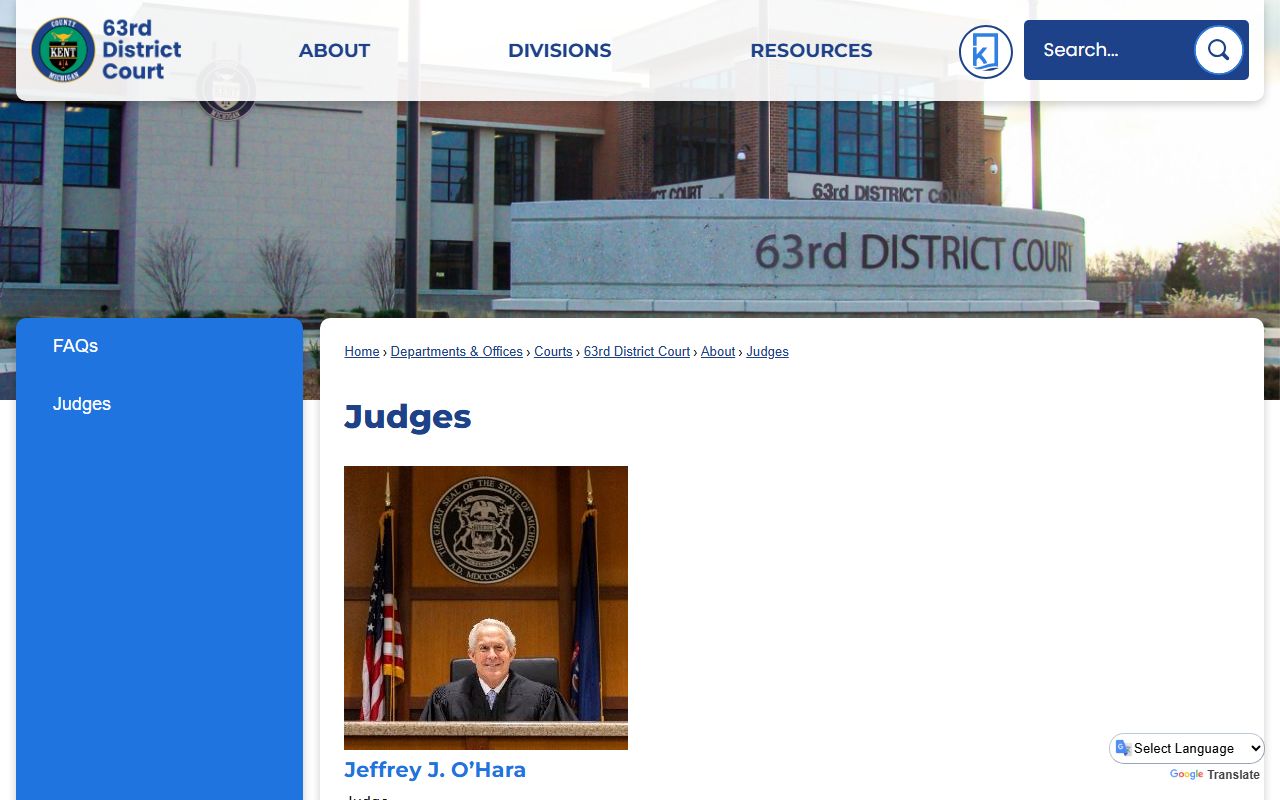
Reading the judges page alongside a docket ties the two together, because the docket names the judge and the calendar shows when that judge sits. The 63rd District Court publishes its own hearing schedule link for its Cedar Springs, East Grand Rapids, Lowell, and Rockford caseload, and the district courts keep their calendars separate from the circuit calendar.
When Kent County Dockets Update
Online dockets are close to current, but they are not always instant. The 61st District Court public access portal warns plainly that recent entries may not appear immediately. A filing made at the counter can take time to post to the electronic register, so a same-day motion or order might not show up on the docket right away.
That lag matters most for time-sensitive checks. If a hearing was held this morning or a document was filed hours ago, the docket may still show the prior state. When a recent event is missing, waiting a business day or calling the court clerk is the reliable fix. For a broader look at how the county's record systems fit together, the Kent County court records overview covers the portals, fees, and offices behind these dockets.
The safest habit is to treat an online docket as a strong lead, then verify anything urgent with the court that holds the case. Michigan keeps these records public so the everyday check is quick, and a short confirmation call closes the small gap between what the portal shows and what the file actually holds.