
Kent County Arrest Records and Court Charges
An arrest record is the account of the arrest itself. It captures the arresting agency, the booking number, the booking date, basic demographics, and the offenses the officer listed at intake. In Kent County this booking side lives with the sheriff and the county jail, and much of it is visible through the public jail viewer. The arrest record answers a narrow question: who was taken into custody, when, and on what alleged offense. It does not decide guilt, and it does not set the final charges.
The court charge record is a separate layer. After the arrest, the Kent County Prosecutor reviews the case and decides which formal charges to file with the court. Those filed charges, and every change to them, form the charge record that moves through the case. The booking and custody detail sits in the Kent County jail roster and inmate records, while the pleas, hearings, and final outcome that follow the court charges after arrest belong to the full criminal court case file. The middle stretch, the charges themselves, is where the arrest and the case connect.
How Charges Get Filed After a Kent County Arrest
A charge record begins when a prosecutor files a charging document with the court. In Michigan the arresting agency forwards a report, and the Kent County Prosecutor's Office reviews it before charges are authorized. The current prosecuting attorney is Christopher R. Becker, with Monica Janiskee serving as Chief Assistant Prosecutor. The office appears in Circuit Court, District Court, Probate, and Family Division matters, and the main criminal and appeals line is 616-632-6710. Details are posted on the county prosecutor page.
Three charging documents can start a Michigan criminal case, and which one is used depends on the severity of the offense and how the case reaches the court.
| Complaint | Information | Indictment | |
|---|---|---|---|
| Filed By | Officer or prosecutor | Prosecutor | Grand jury |
| Common For | Misdemeanors and the start of felonies | Felonies bound over to Circuit Court | Serious felonies, rare in Michigan |
| Where It Lands | District Court | Circuit Court | Circuit Court |
| What It Does | Opens the case and lists the offense | Restates felony charges for trial | Returns charges after grand jury review |
Most cases start with a complaint. A misdemeanor complaint stays in one of the county's district courts. A felony complaint also starts in district court, moves through a preliminary examination, and then, if the judge finds probable cause, the charges are bound over to the 17th Circuit Court on an information. Grand jury indictments exist in Michigan but are uncommon. The office also runs a warrant-review step before charges are authorized, which is described in the county's prosecutor warrant-review material.
Kent County Prosecutor's Office
Christopher R. Becker, Prosecuting Attorney
616-632-6710 (criminal and appeals)
Charge Codes and Severity Levels
Every filed charge points to a specific statute, usually a Michigan Compiled Laws citation, and carries a severity level. That coding is what tells a reader whether a charge is a felony, a misdemeanor, or a civil infraction. One arrest can produce several separate charges, each with its own code and its own status, so a single booking may line up against a list of counts rather than a single offense.
- Felony
- The most serious level, punishable by more than a year and handled in Circuit Court after bindover.
- Misdemeanor
- Lower-level offense handled in District Court; more serious 93-day-or-higher misdemeanors require booking at the county jail for prints and photos.
- Civil infraction
- A non-criminal violation, common in traffic matters, that carries fines rather than jail.
- Count
- A single charged offense; a case can list multiple counts from one incident.
- Statute cite
- The MCL section number the charge is based on, which fixes its legal definition and range.
Reading the level matters because it drives the entire path of the case. Felony counts move toward Circuit Court, misdemeanor counts stay in district court, and infractions rarely reach a criminal docket at all. The 63rd District Court criminal page is a good local guide to how misdemeanor charges and their booking rules work.
Charge Status and What It Means
Charges are not fixed once they are filed. As a case moves, a prosecutor can add, amend, reduce, or drop counts, and a judge can dismiss them. The status attached to each charge is often the single most useful field in the record, because it shows where that count actually stands. The terms below appear across Kent County case files.
| Status | What It Means |
|---|---|
| Amended | The charge was formally changed, such as a different statute or an added or altered count. |
| Reduced | The charge was lowered to a less serious level, often a felony reduced to a misdemeanor. |
| Dropped or Dismissed | The charge is no longer being pursued; a dismissal can be with prejudice, meaning it cannot be refiled, or without prejudice, meaning it can. |
| Nolle Prosequi | A formal notice that the prosecutor declines to proceed further on that charge. |
| Bound Over | The court found probable cause at the preliminary exam and sent the felony charge up to Circuit Court. |
A pending status simply means the count is still open and working through the court. Because these values change quickly, the version shown in a public portal is a snapshot, not a final word. Checking the register of actions gives the fuller history behind any status change.
Charges vs. Convictions
Being charged is not the same as being convicted, and the distinction runs through every arrest and charge record. A charge is an accusation. A conviction is a finding of guilt by plea or verdict. Kent County jail and court materials repeat the point plainly: an arrest does not equal a conviction, and a filed charge can still be reduced, dismissed, or defeated at trial.
| Charge | Conviction | |
|---|---|---|
| Stage | Accusation after arrest | Verdict or plea |
| Burden of Proof | Probable cause | Beyond a reasonable doubt |
| Can It Change | Yes, amended, reduced, or dropped | Final unless appealed or set aside |
| Public Record | Yes, unless nonpublic | Yes, unless set aside |
The practical takeaway is that a charge record read on its own can mislead. A person may appear in a booking or a case index on charges that were later dropped or that never led to a conviction. The disposition, found in the full case file, is what closes that gap.
How to Find Kent County Arrest Records and Charges
Two tracks lead to this information. The court case search shows the filed charges and their status, while the jail viewer shows the arrest and booking side. The county gathers the custody tools on one page, the inmate lookup landing page, which links the jail viewer, victim notification, and a phone fallback. That starting point is published on the county inmate lookup page.
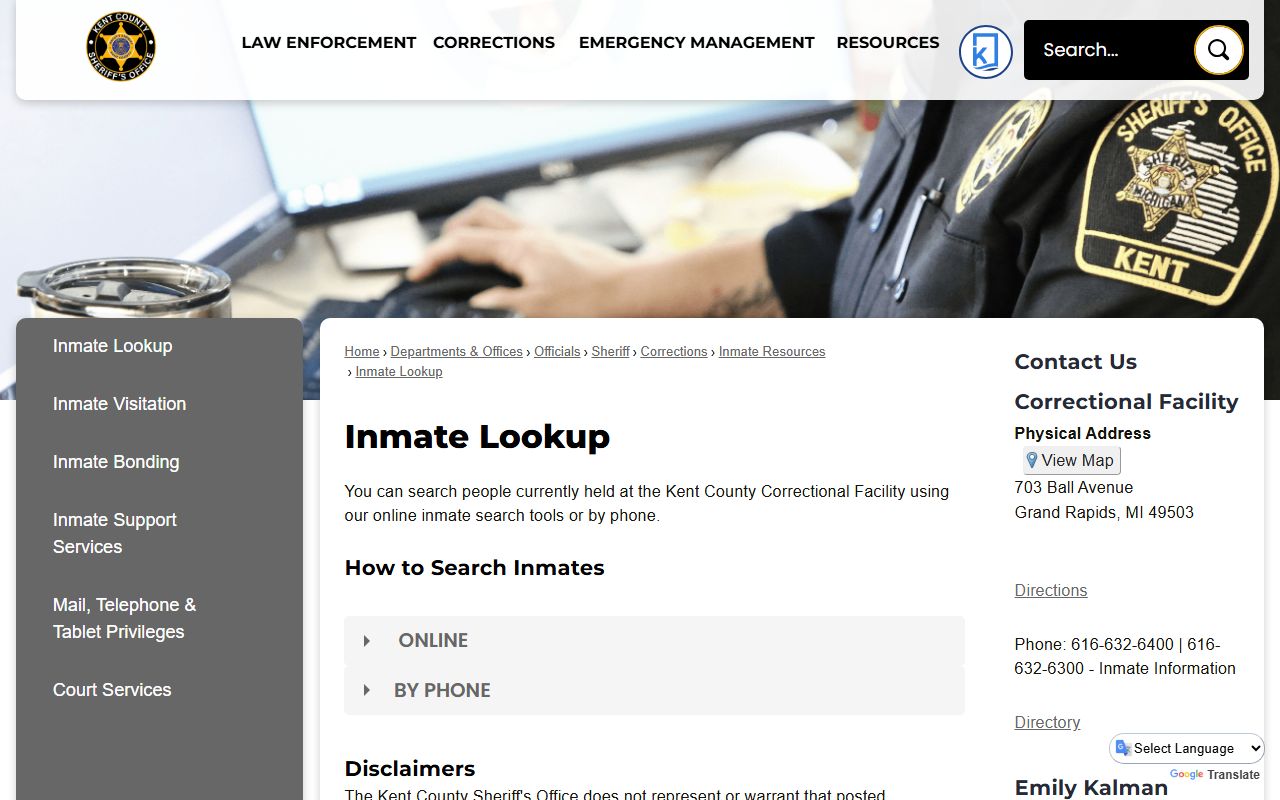
That landing page is the fastest way to reach the booking data behind an arrest record without hunting through separate court systems.
To read the filed charges themselves, the court case portals are the better route. The county's district and circuit courts each publish a case lookup, and the steps below apply across them.
- Open the case search for the court that holds the matter, such as the 62-B Kentwood public case system, the 61st District Court case lookup, the 62-A MiCOURT search, or the 17th Circuit Court records page.
- Search by defendant last name, or by case number when it is known, and add a date of birth to narrow common names.
- Open the matching case and read the full charge list, since one case can carry several counts.
- Check each charge for its statute code, severity level, and current status.
For the arrest side, the jail booking search is public and needs only a complete last name to begin. Optional first name and booking date fields help filter the results. The form is posted through the Kent County jail booking search.
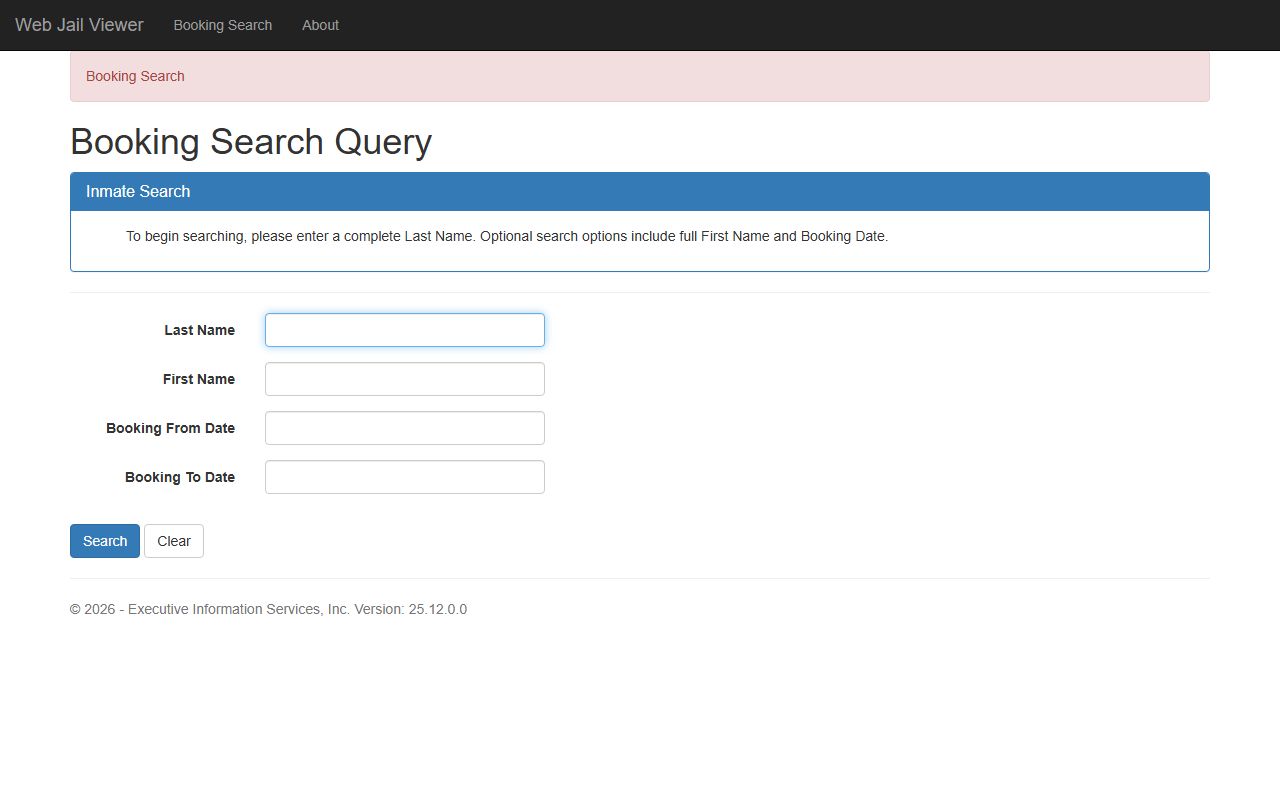
Its fields are simple, which makes it a quick check for whether a person is currently held and what the arresting agency listed.
| Field | Required | Notes |
|---|---|---|
| Last Name | Yes | Must be a complete last name; the search starts here. |
| First Name | No | Optional field to narrow results. |
| Booking From Date | No | Optional; used only together with a name. |
| Booking To Date | No | Optional; used only together with a name. |
How Charges Appear in the Kent County Jail Viewer
The jail viewer is run by the sheriff, Michelle LaJoye-Young, and covers people currently held at the Kent County Correctional Facility at 703 Ball Avenue in Grand Rapids. The portal itself states that it may show person-descriptive information, mugshots, and offenses charged by the arresting agency. That last point is what ties it to the charge question: the offenses shown here are the arresting agency's listed charges, not the prosecutor's final filed counts. The results grid is published through the jail booking search results.
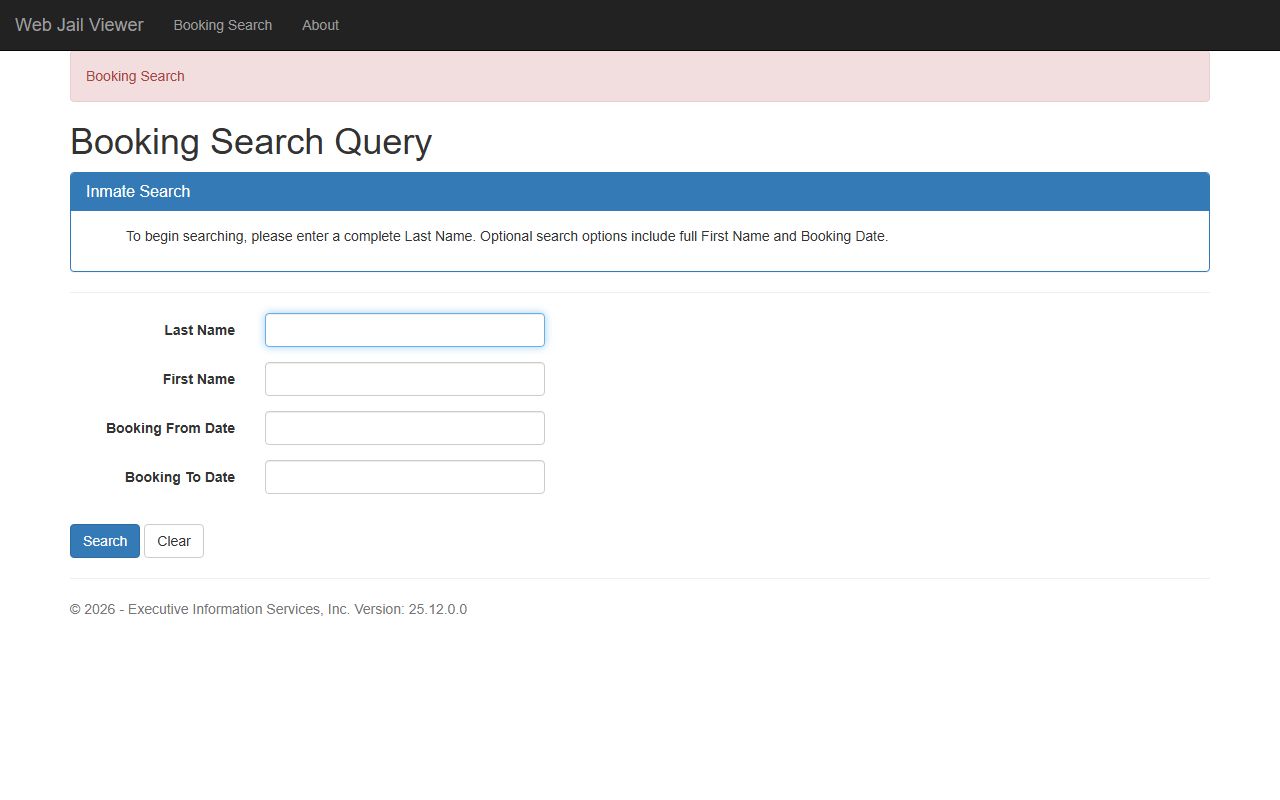
The grid returns more than a name list, and it supports paging, sorting, and filtering. A booking record typically shows these fields.
- Booking number and booking date
- Last, first, and middle name
- Date of birth, race, and sex
- Release date and schedule date
- Location within the facility
When a person is not visible online, the county offers a phone fallback, the inmate information line at 616-632-6300 option 1. The sheriff cautions that roster data is not guaranteed to be current, accurate, or complete, and that it should not be relied on for legal action.
Note: The offenses shown in the jail viewer are the arresting agency's charges at booking and may differ from the final charges the prosecutor files with the court.
Statewide Charge and Criminal History Lookups
Charges do not stay only in county systems. Once a person is committed to state custody, the record rolls up into the Michigan Offender Tracking Information System, known as OTIS, run by the Department of Corrections. OTIS shows prisoners, parolees, and probationers under state supervision along with their offenses and status. The statewide tool is published on the Michigan OTIS offender search.
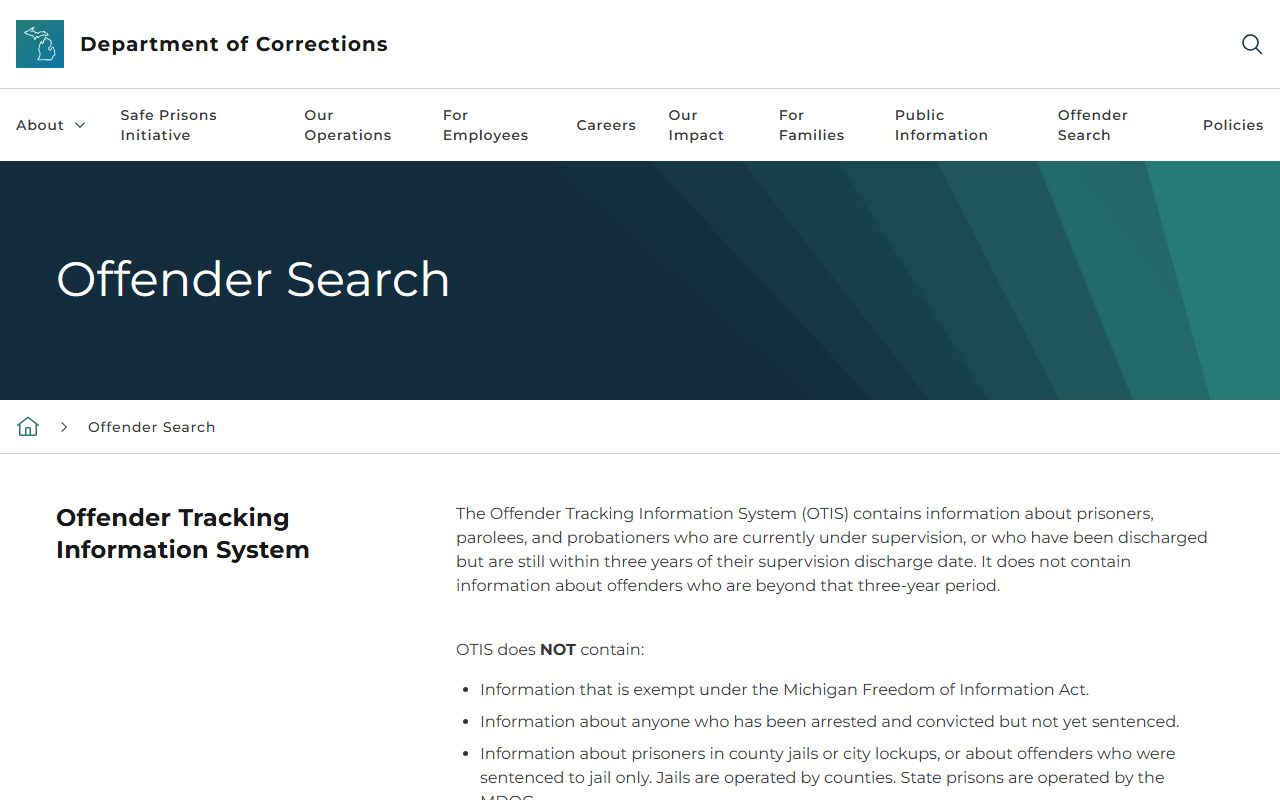
OTIS is the best statewide view when a case has moved past the county level and into the prison or supervision system.
For custody status and alerts, Michigan also runs a VINE service that lets the public register for notifications about an offender's custody changes. And for a formal criminal-history check, MCL 28.243 routes Michigan criminal-history dissemination through the state police records system, which defines what a background query returns. These statewide channels sit alongside the county tools rather than replacing them, and the Michigan VINE service is available online for custody notifications.
Requesting Kent County Arrest Records From the Sheriff
When a booking is no longer live in the jail viewer, or when a formal copy is needed, the sheriff's records division is the channel. The division handles sheriff records, criminal records, and public requests under the Michigan Freedom of Information Act, MCL 15.233, which gives access to public records when a written request describes the record well enough and no exemption applies. The records unit and FOIA line is 616-632-6200, and the division is described on the sheriff records page.
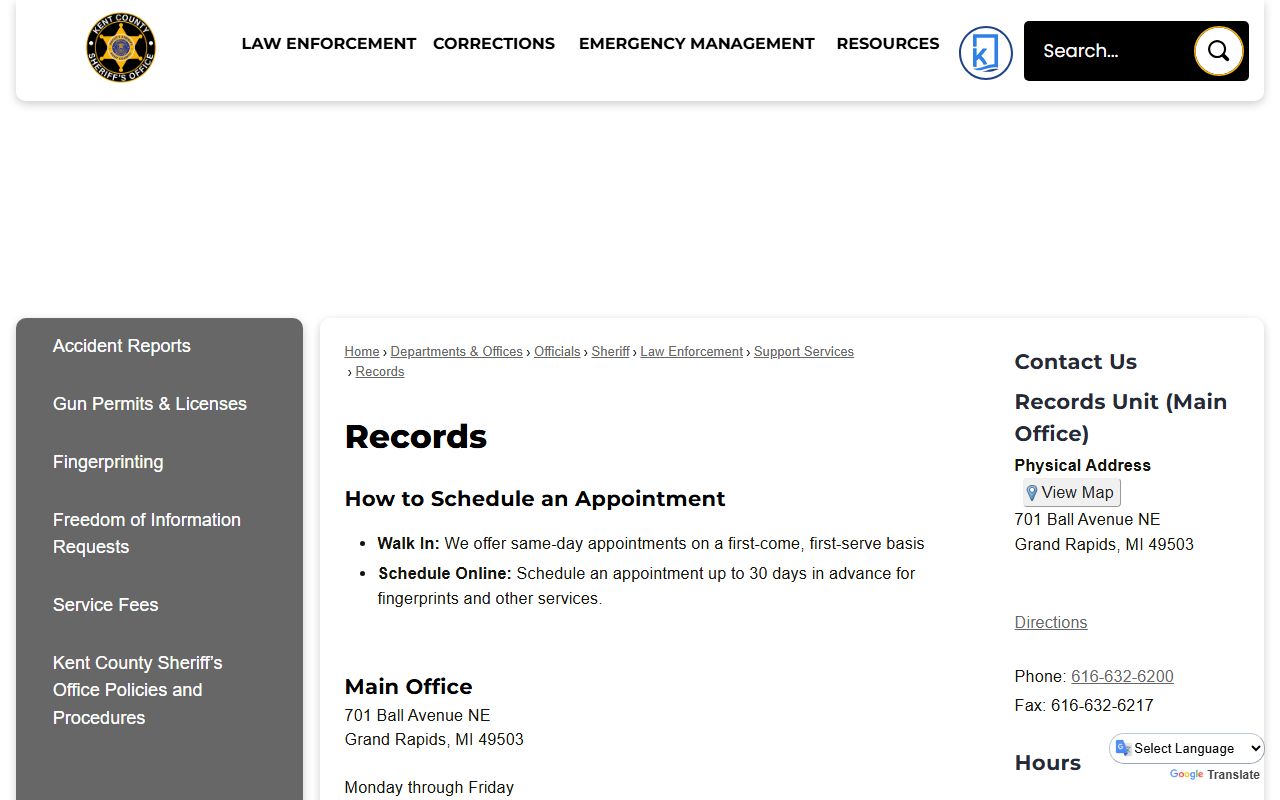
That page is the practical starting point for arrest reports and incident records that the online viewer does not carry.
The sheriff also publishes a support-services page that gathers records contacts and related service links in one place, which helps when it is not obvious which unit holds a particular file. The overview is posted on the sheriff support services page.
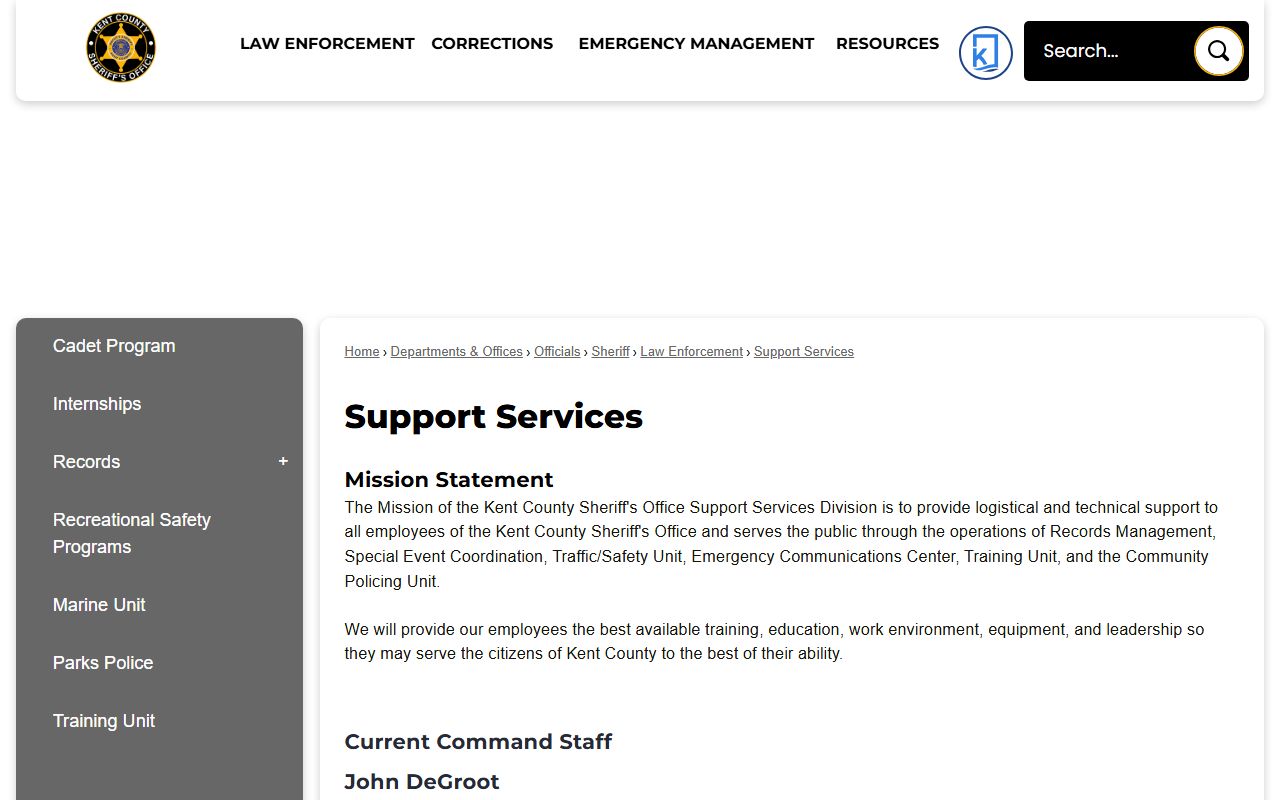
Between the FOIA records unit and the support-services directory, most arrest-side documents that are not in the jail viewer can still be reached through a written request.
Restricted Charge Records in Kent County
Not every charge record is open to the public. Under MCR 8.119, Michigan court records are public unless a rule or statute makes them nonpublic or sealed, and under MCR 1.109 public filings must omit protected personal identifying information. That is why some data, such as dates of birth, Social Security numbers, and account numbers, is redacted rather than fully hidden.
Several categories are limited or removed from public view.
- Juvenile charges, which carry special confidentiality and set-aside rules under MCL 712A.18e.
- Sealed records, reachable only by court order or authorized access.
- Expunged charges, which become nonpublic once a conviction is set aside under MCL 780.621.
- Ongoing investigations and some pre-charge material, which may be withheld until a case is filed.
Expungement in Michigan is a defined process rather than an automatic event. A person files the statutory application, pays the filing fee if it is not waived, waits out any required period after conviction or sentence completion, and then asks the court to set the conviction aside. If the court approves, the conviction stops appearing in ordinary public access, though it may remain in limited law-enforcement systems.